

Become a U.S. citizen faster.
Most applicants wait five years to naturalize — but several provisions of the law let qualifying applicants become citizens sooner. Here are the expedited and special paths, and how to tell which fits you.
- The three-year rule (INA 319(a)). Spouses of U.S. citizens can naturalize after three years as a permanent resident instead of five — covered in full at spousecitizenship.com.
- Spouse of a citizen abroad (INA 319(b)). No continuous-residence or physical-presence requirement — our flagship specialty.
- Military service (INA 328/329). Service members and veterans have their own reduced or waived requirements.
- Children of citizens abroad (INA 322). A path to citizenship for the foreign-resident children of U.S. citizens.
- One conversation finds your fastest path. A licensed U.S. immigration attorney will tell you which provision fits.
Faster than the standard five years
Naturalization under the general rule requires five years as a lawful permanent resident. But the Immigration and Nationality Act shortens that wait for people in particular situations. In some cases it removes the wait entirely. The right path depends on your status, your marriage, and where you and your family live and work.
Spouse of a U.S. citizen: the three-year rule (INA 319(a))
This is the most widely used expedited path. You qualify if you are a lawful permanent resident who has been living in marital union with the same U.S. citizen for the last three years, and your spouse has been a citizen for that whole period. You may then apply to naturalize after three years as a permanent resident, rather than five. It shortens the wait. It does not waive residence — you still need three years of continuous residence and eighteen months of physical presence, plus good moral character, English, and civics. "Living in marital union" is a term of art, and it is where most of these cases turn. See the dedicated site spousecitizenship.com for the full detail.
Spouse of a citizen working abroad: INA 319(b)
If your U.S. citizen spouse is regularly stationed abroad in qualifying employment, 319(b) goes further still. It removes the continuous-residence and physical-presence requirements entirely. You can naturalize on an expedited timeline from overseas. This is our flagship specialty. See the dedicated site 319bnaturalization.com for the full detail.
Other special paths
Several more provisions exist for particular circumstances. We'll confirm whether you qualify and, where a matter falls outside our family-immigration focus, point you in the right direction:
- Military service (INA 328/329). One year of peacetime service reduces the residence requirement. Service during a designated period of hostilities can waive the residence and physical-presence requirements altogether.
- Children of U.S. citizens residing abroad (INA 322). A child under 18 living outside the United States with a U.S. citizen parent may obtain citizenship through an expedited process (Form N-600K).
Eligibility rules for each provision are specific and detail-sensitive. The fastest way to know your options is a short conversation.
How we help
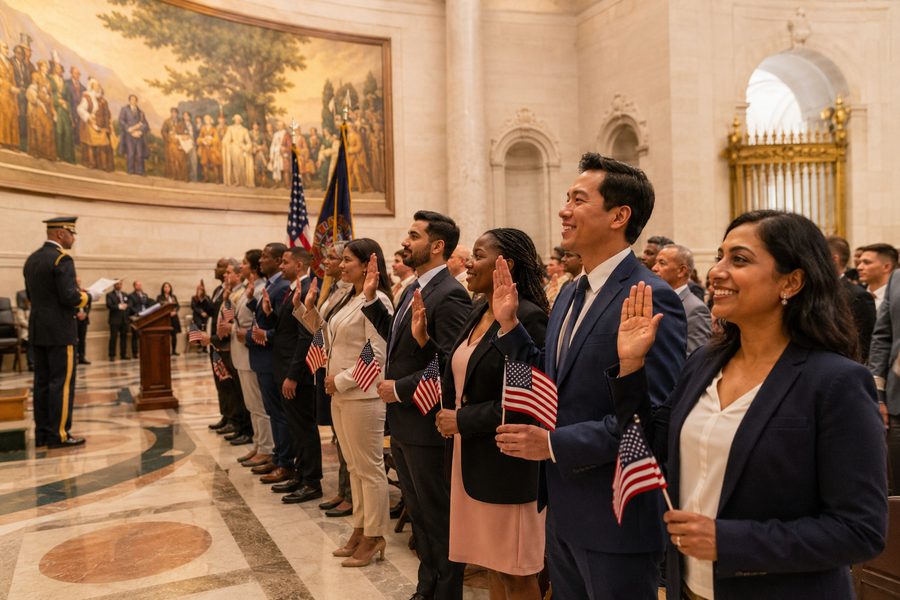
We identify the provision that gets you to citizenship soonest, confirm your eligibility, prepare and file the Form N-400 (or N-600K) with the correct legal basis and supporting evidence, and prepare you for the interview and oath. A licensed U.S. immigration attorney with 30 years of experience stays on your file from intake through the oath ceremony.
Find your fastest path to citizenship.
Tell us about your situation and a licensed U.S. immigration attorney will identify the expedited path that fits — usually within one business day. All inquiries are confidential. Sending this form does not create an attorney-client relationship until we have agreed to represent you in writing.
Common questions.
How can I naturalize faster than five years?
The most common shortcut is the three-year rule (INA 319(a)) for spouses of U.S. citizens. INA 319(b) goes further for spouses of citizens employed abroad (no residence requirement), and military service under INA 328/329 has its own reduced or waived requirements.
What is the three-year rule?
A permanent resident living in marital union with the same U.S. citizen for three years — during which the spouse has been a citizen — may apply to naturalize after three years instead of five. It shortens the residence wait (to three years, with eighteen months of physical presence) but does not waive it, and the good-moral-character, English, and civics requirements still apply. See spousecitizenship.com for the full detail.
What is INA 319(b)?
It lets the permanent-resident spouse of a U.S. citizen who is regularly stationed abroad in qualifying employment naturalize on an expedited timeline, without the standard continuous-residence and physical-presence requirements. See 319bnaturalization.com.
Do I have to be a green-card holder first?
For most expedited paths, yes. Some military provisions are exceptions. If you are not yet a permanent resident, we can help you obtain the green card first and then pursue expedited naturalization.
Sources
This page summarizes federal naturalization law in plain language. It is general information, not legal advice.
- General five-year rule — INA § 316 (8 U.S.C. § 1427).
- Three-year rule for spouses of citizens — INA § 319(a) (8 U.S.C. § 1430(a)); 8 CFR § 319.1.
- Spouses of citizens employed abroad — INA § 319(b) (8 U.S.C. § 1430(b)); see 319bnaturalization.com.
- Military service — INA § 328 (peacetime) and INA § 329 (hostilities).
- Children of citizens residing abroad — INA § 322 (8 U.S.C. § 1433) (Form N-600K).
- USCIS Policy Manual — Volume 12: Citizenship & Naturalization.
Ready to become a citizen sooner?
Free consultation with a U.S. immigration attorney. We'll find your fastest eligible path.